1
2
3
4
5
6
7
8
9
10
11
12
13
14
15
16
17
18
19
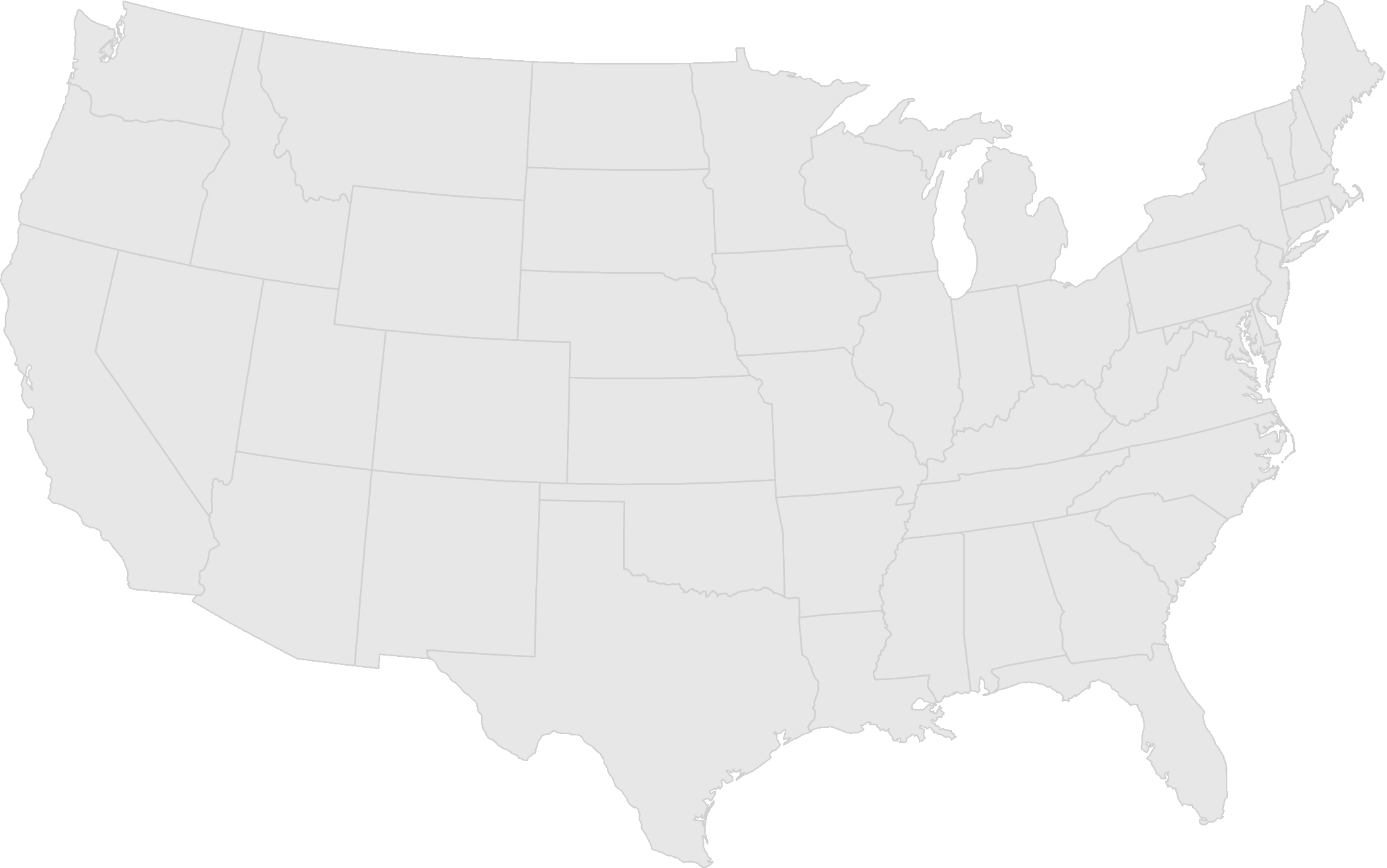
The DOT-111A tank car has been a factor in rail oil and spills for decades. Browse the map and timeline below to see incidents that involved the tank car.
Coupler strike and head puncture of a DOT-111A tank car loaded with 24,700 gallons of ethylene oxide, a flammable liquid. Material escaped through small breach, ignited and burned for 40 hours, causing evacuation of railroad personnel, part of Newark International Airport, the New Jersey marine terminal and a nearby hotel. Flights were delayed at airport, and a four-mile section of highway leading to the Holland Tunnel was closed until the fire burned out.
Coupler strike and head puncture of a DOT-111A tank car loaded with nitric acid, a corrosive material. It escaped through the breach and formed a vapor cloud over the area, and started a few small fires. The acid was neutralized with soda ash, applied with a snow blower brought in from Stapleton International Airport. 9,000 people were evacuated for several hours, and 34 were injured.
Derailment and breach of two DOT-111A tank cars loaded with methanol, a flammable liquid. Unprotected bottom outlets sheared off, releasing cargo, which ignited a fire, destroying three buildings and four automobiles. About 2,100 people were evacuated within a 1-mile radius of the accident site, and a major highway, U.S. 74, was closed. The fire burned for 12 hours. One person sustained minor injuries in evacuation.
Derailment and breach of five DOT-111A tank cars carrying cyclohexane, a flammable liquid. Cars were not equipped with head shields and all sustained head punctures. Material ignited. Residents evacuated within a 1-mile radius.
Unattended runaway train rolled downgrade and struck a locomotive, with 15 cars derailing. Two DOT-111A tank cars carrying hydrogen peroxide, and another carrying isopropyl alcohol, breached material and contributed to a massive explosion. About 3,500 residents were evacuated in subzero temperatures. Nearby homes, schools and businesses damaged in blast.
Derailment of six tank cars, including DOT-111A, DOT-105A and DOT-112A types, none of which were equipped with head shields. All were punctured or dented and lost all or part of contents. Hazardous materials released included acrylic acid, trimethylchlorosilane and petroleum naptha. Interaction with materials in other cars ignited fire. 1,000 residents evacuated for a week, and 11 people injured.
Derailment in sharp curve on bridge over Sacramento River. One DOT-111A tank car fell 40 feet into river and sustained head punctures. Breached car leaked 19,000 gallons of metam sodium, a highly toxic pesticide, into river. Contaminated 42 miles of river, killing all fish and plant life, and many local residents required hospitalization when exposed. Considered worst chemical spill in California history. Railroad paid $38 million in damages for river cleanup and restoration.
Derailment on approach to Nemadji River bridge. One DOT-111A tank car fell into river and sustained severe crushing damage, releasing 21,850 gallons of flammable liquid aromatic hydrocarbons (benzene). Volatile compound evaporated from water and formed vapor cloud 20 miles long and five miles wide. 40,000 people evacuated from Superior and nearby Duluth, Minn. State agencies reported that 16 species of wild animals were found dead near the accident site.
Brakes fail as freight train descends steep grade in Southern California’s Cajon Pass. Train jumps tracks at 45 mph, derailing four locomotives and 45 of 49 cars. Train’s conductor and brakeman were killed, and the engineer seriously injured. 11 of 12 tank cars that derailed were DOT-111A type, and none included head shields. Cargoes included three flammable liquids: trimethyl phosphite, methyl ethyl ketone and butyl acrylate. Fire engulfed derailment site.
DOT-111A tank car broke in half as train pulled forward, releasing 8,000 gallons of carbon disulfide, a flammable and toxic material used to produce rubber and pesticides. 500 people were evacuated, including residents of a nursing home. One person admitted to hospital.
Derailment involving hazardous liquids and flammable gases, with fire and explosions. About 3,500 residents evacuated. Five DOT-105J pressurized tank cars carrying flammable gases survived the derailment without breach, but three failed in after 103 minutes exposure to fire caused by other tank car breaches. Seven more nonpressure tank cars breached in the derailment, and they carried flammable liquids, corrosives and a poisonous solid.
Derailment about halfway through 1.5-mile Howard Street Tunnel under downtown Baltimore. DOT-111A tank car sustained head puncture and breached tripropylene, a flammable liquid. Fire spread to adjacent cars carrying wood and paper products, and heavy black smoke poured out of both ends of the tunnel, blocking access for emergency responders. Intense heat from fire caused 40-inch water main above tunnel to burst, pouring millions of gallons of water into tunnel. Fire burned for five days. Camden Yards baseball park evacuated Only five minor injuries.
Derailment where four DOT-111A tank cars carrying methanol, a flammable liquid, breached, fueling a fire. 850 residents evacuated in a three-mile radius for three days, including entire village of Tamaroa. One contract employee injured during cleanup. Total of 19 tank cars derailed, 14 of which were DOT-111A type. Half of those breached, including the two cars carrying methanol. Other hazardous materials in cars that breached included phosphoric and hydrochloric acids, both corrosives, and formaldehyde solution, a flammable liquid.
Derailment of 23 of 83 cars of ethanol on Beaver River bridge. All cars were DOT-111A type. Some cars fell into river, and 20 spilled cargo, which resulted in a fire that burned for 48 hours. Homes and businesses within a seven-block area evacuated for two days. About 150 people were affected. About 485,000 gallons of ethanol estimated spilled. A dozen cars lost their entire loads, while eight cars lost part of theirs.
Among 14 cars that derailed in mixed freight train, eight cars of crude oil derailed. All spilled their contents, three from large gashes in their shells. The spilled oil caught fire and caused a massive explosion that was captured by a local TV news crew in a helicopter. About 35 people were evacuated but returned to their homes the same day. Crude oil originated in Fairview, Mont., in the Bakken region. Incident could have been an early sign of Bakken oil’s flammability.
Derailment of a 114-car ethanol train at a road crossing after heavy rains washed out track. Of the 19 cars that derailed, 13 breached and lost cargo, which caught fire. The fire engulfed vehicles waiting at road crossing for train to pass. One woman was killed, and two people in the same car were seriously injured. Five more motorists were injured, as were two firefighters who responded to the incident. 600 residents evacuated within a half-mile radius. NTSB specifically cites the inadequate design of the DOT-111A cars as a contributing factor in the accident.
Unmanned runaway train of 72 cars of Bakken crude oil loaded in North Dakota rolls down 1.2 percent grade and derails on a 10 mph curve at 60 mph. Massive fire burns for days with many explosions. Much of village’s center destroyed. 47 people killed, mostly at a bar near the tracks. Transportation Safety Board of Canada investigating. 1.5 million gallons of crude estimated to have spilled into the town and adjacent lake. Most or all of the cars were DOT-111A type.
Approximately 26 cars of 90-car crude oil train derail and spill contents in rural Alabama wetland, causing fire and large explosions. Pipeline and Hazardous Materials Safety Administration reports 748,000 gallons of crude oil spilled from cars listed as DOT-111A. No major evacuations.
Unit oil train strikes a derailed grain hopper from train on adjacent track. Oil train then derails two locomotives, one buffer car and 20 tank cars. According to preliminary report from NTSB, 18 of the 20 cars spilled cargo through punctures. Intense fire ignites, and two-thirds of Casselton’s 2,400 residents evacuated in subzero temperatures for a day. NTSB also reports that 400,000 gallons of crude oil were spilled.
About 92,000 DOT-111s are in use; 78,000 lack extra safety features. Most tank cars are leased by oil companies or other firms moving products by rail; safety standards difficult to update.
